
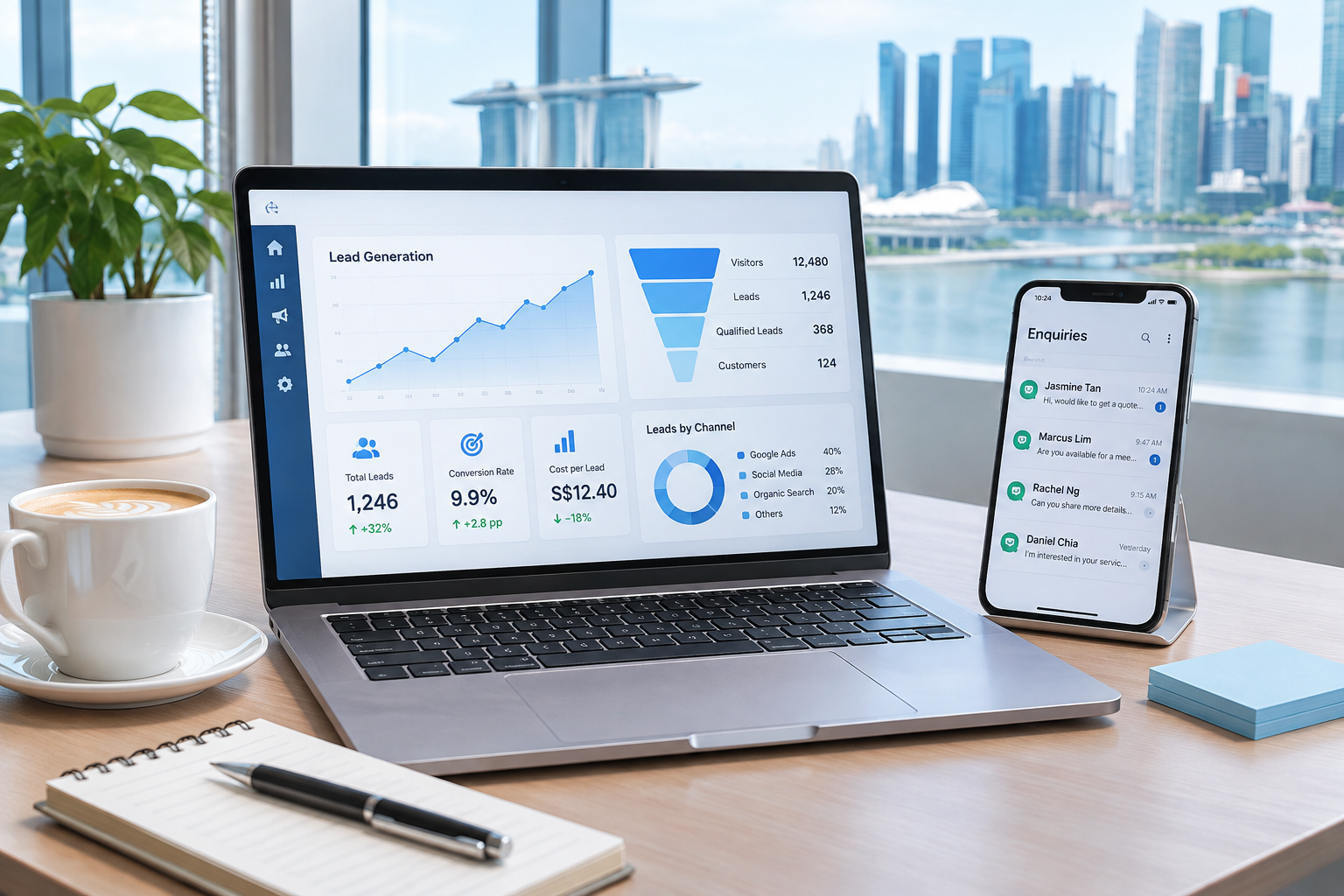
Lead generation for small business Singapore owners need is not a list of clever tricks. It is a simple system that helps the right people find you, makes it easy for them to get in touch and ensures no enquiry is forgotten. Many SMEs run ads or post often, yet still feel unsure where their next customers will come from, because each step is handled separately.
This guide explains a four-stage system you can run with a small team, plus examples for different types of business and the mistakes that quietly lose good leads.
What Is Lead Generation?
A lead is a person who shows interest in what you offer, for example by sending a message, filling in a form, calling or asking for a quotation. Lead generation is the process of attracting those people and collecting their interest in a way you can follow up.
It is not the same as making a sale. It is the start of a relationship, which is why quality and follow-up matter as much as volume.
Why Lead Generation for Small Business Singapore Needs a System
Singapore customers compare several businesses before they decide, and they expect quick, clear replies. If your marketing attracts interest but your enquiry process is slow or confusing, you lose people you already paid to reach.
A system also makes your results easier to understand. When each stage has a purpose, you can see where leads drop off, and fix that stage instead of changing everything at once.
Start With a Clear Ideal Customer Profile
Before you choose any channel, write a short profile of the customer you most want. Note their age range or business type, the problem they are trying to solve, how much they can spend and what makes them hesitate. A cleaning company, for example, may serve busy families in condominiums, while a tuition centre serves parents of primary school children. The two need very different messages.
Good lead generation for small business Singapore owners can sustain starts with this profile, because every later choice, from the wording of your posts to the questions on your form, depends on it. Ask your three best existing customers how they found you and why they chose you. Their answers often reveal the sources and reasons that matter most.
A 4-Stage Lead Generation System
The four stages are attract, enquire, follow up and review. Each one answers a simple question: who sees you, how do they reach you, what happens next and what did you learn?
Stage 1: Attract the Right People
Start with the people most likely to need you. Describe your ideal customer, then think about where they look for help. Good places for most SMEs include Google search and your Google Business Profile, social media, referrals from happy customers and partnerships with related businesses.
Pick two or three sources and do them well. A focused approach to lead generation for small business Singapore teams can manage is far better than a scattered effort across many platforms. Our guide to a small business marketing plan Singapore owners can follow helps you choose.
Stage 2: Make It Easy to Enquire
People often give up when contacting you feels like work. Offer simple options, such as a WhatsApp button, a phone number that can be tapped and a short form with only the questions you truly need.
Make the next step obvious on every page and post, using clear wording such as “Get a quote” or “WhatsApp us”. When you collect personal details, explain how you will use them, and follow the guidance from the Personal Data Protection Commission. Easy, respectful enquiry options are a core part of lead generation for small business Singapore customers will trust. Test your own process by sending a message as a customer would, and note how long the reply takes.
Stage 3: Follow Up Quickly and Kindly
Speed matters. A reply within minutes feels attentive, while a reply the next day often arrives after the customer has contacted someone else. Decide who answers enquiries, and set a target time.
Prepare short, friendly message templates for common questions, and send a polite follow-up if you hear nothing. Keep a simple list of every lead with the date, source and status. This habit turns lead generation for small business Singapore efforts into real conversations instead of forgotten messages.
Stage 4: Review and Improve
Once a month, count how many leads came from each source, how many became customers and what each lead cost you. Our guide to marketing KPIs Singapore businesses should track explains the numbers, and our Google Analytics 4 Singapore guide shows how to record enquiries from your website.
Then make one change at a time. Improve the stage where most leads drop off, and review again next month. This is how lead generation for small business Singapore systems get better over time.
Share the results with your team, so everyone understands which sources bring good customers and why quick replies matter.
Follow-Up Message Examples You Can Adapt
Templates save time and keep your tone consistent. Adjust the wording so it sounds like your business:
- First reply: “Hi, thanks for contacting us. May I confirm the date and location you need, so I can prepare an accurate quote?”
- Reminder after two days: “Hi, just checking if you had a chance to review our quotation. Happy to answer any questions.”
- Last gentle nudge: “Hi, I will close this enquiry for now, but you are welcome to message us whenever you are ready.”
Each message is short, polite and offers a clear next step. Avoid pressure, and never send repeated messages within a short time. The lead generation for small business Singapore customers appreciate most feels helpful rather than pushy.
Online and Offline Lead Sources That Work in Singapore
Singapore is compact and highly connected, so online and offline sources often work together. A customer may walk past your shopfront, search your name on Google, read your reviews and then send a WhatsApp message, all within a day.
Online Sources
Google search and Google Maps capture people who are ready to act. Social media builds familiarity, while email and WhatsApp broadcasts keep past customers close. Marketplaces and directories can help newer brands become visible.
Offline Sources
Word of mouth, neighbourhood flyers, community events, networking and partnerships with related businesses still bring strong leads, particularly for services. A printed QR code that opens your WhatsApp chat links these offline moments to your online process.
The most reliable lead generation for small business Singapore companies use blends one or two sources of each type, with one tracking method for all. Even a simple question such as “How did you hear about us?” gives you useful data.
Lead Sources by Business Type
The best sources depend on what you sell. These are common starting points:
- Cleaning services: Google Business Profile, customer reviews, referrals and WhatsApp enquiries
- Restaurants: Google Maps, social media, reviews and promotions that bring customers back
- Tuition centres: Parent referrals, trial classes, social proof and clear communication about progress
- Kitchen and interior design: Project photos, consultations, showroom visits and referrals
- Own-brand products: Social content, online store listings, creators and email follow-up
Use this list as a starting point for lead generation for small business Singapore plans in your own industry, then test and keep what works.
Lead Magnet Ideas for SMEs
A lead magnet gives people a reason to get in touch. Choose something that solves a real problem:
- A free quotation or consultation
- A short checklist or buying guide
- A trial class, sample or demonstration
- A price guide or package comparison
- A seasonal offer with a clear deadline
- A free review of their current situation
Keep the offer simple and honest, and make sure you can deliver it quickly.
Example: A 30-Day Lead Plan for a Tuition Centre
Imagine a small tuition centre that wants more trial class sign-ups. This is an illustration, not a client result.
- Week 1: Complete the Google Business Profile, add a WhatsApp button and write a short trial class page
- Week 2: Post study tips and student progress stories, with permission, and ask parents for reviews
- Week 3: Offer a free trial class, reply to every enquiry within an hour and send a reminder the day before
- Week 4: Count enquiries by source, note which converted and plan the next month
The plan is simple, but each stage has a purpose. That is the difference between hoping for leads and building a process. The same pattern works for most small businesses, with different sources and offers.
A Simple Lead Tracking Sheet
A spreadsheet is enough to begin. Add one row for each lead, with these columns:
- Date and name
- Source, such as Google, Instagram, referral or WhatsApp
- What they asked for
- Date of reply and follow-up
- Status, such as new, quoted, won or lost
- Reason if lost
After a month, the sheet shows which sources work and where leads go cold.
Simple Numbers to Track Each Month
You do not need complex software to understand your results. Three numbers are enough at the start: the number of leads, the percentage that become customers and the cost of winning each customer.
For example, suppose you receive 40 enquiries in a month and 8 become customers. Your conversion rate is 20 percent. If you spent $800 on ads and time, each customer cost about $100 to win. If most of those customers came from Google and only a few from Instagram, you know where to place your effort next month.
Review lead quality as well as quantity. A source that brings fewer leads but more customers is often the better investment. Reliable lead generation for small business Singapore teams run depends on these simple checks done consistently, not on perfect dashboards.
Build Trust Before Customers Enquire
People rarely contact a business they do not trust. Reviews, clear pricing, real photos, visible contact details and a short “about us” page all lower the risk a customer feels. Show examples of past work, and reply to every review, including critical ones, politely.
Display your business details, such as address and opening hours, so visitors know you are a real, local company. Trust signals like these make lead generation for small business Singapore audiences respond to far more effective, because customers feel safe reaching out.
Quality Matters More Than Quantity
Fifty vague enquiries can cost more time than ten good ones. Aim for leads who understand what you offer, can afford it and are ready to talk.
You can improve quality by being clear about who you serve, stating prices or ranges where possible and asking one or two simple questions on your form. Good lead generation for small business Singapore owners rely on filters out poor matches early, which keeps your team focused and your customers happier. It also protects your time for the customers who are most likely to say yes.
Wording That Helps People Enquire
Clear calls to action reduce hesitation. Use plain phrases such as “Get a free quote”, “Book a trial class” or “WhatsApp us now”, and say what happens next. Clear wording makes lead generation for small business Singapore efforts easier to act on, because visitors know exactly what to do.
Common Mistakes to Avoid
- Slow replies: Leads cool quickly when no one answers
- Too many channels: Spreading effort thin means nothing works well
- Long forms: Every extra field loses some people
- No follow-up: Many customers need a reminder before they decide
- No tracking: You cannot improve what you cannot see
- Chasing volume: Cheap leads that never buy are not cheap
Fixing even two of these can lift the results of any lead generation for small business Singapore effort.
How to Get Started
Write down your ideal customer and choose two lead sources. Set up one easy way to enquire, decide who replies and how fast, and create a simple lead list in a spreadsheet. Review it at the end of the month. Choose one change to make this week, so progress starts immediately.
For content that attracts the right people, see our social media content ideas Singapore guide. If you would like help, Globivio’s social media marketing and search engine marketing services can support each stage, and you can see examples in our social media marketing portfolio. Before you commit, ask any partner how they approach lead generation for small business Singapore companies can measure.
Frequently Asked Questions
How Many Leads Should I Aim For?
It depends on your capacity and how many leads become customers. Work backwards from the number of customers you want, then divide by your conversion rate to estimate the leads you need.
Is Paid Advertising Necessary?
No. Many SMEs start with free sources, such as a complete Google Business Profile, referrals and social media. Ads can speed things up once your enquiry process works well.
What Is a Lead Magnet?
It is something useful you offer in exchange for contact details, such as a checklist, a quotation or a free consultation. It should solve a real problem for your ideal customer.
Should I Use WhatsApp or a Form?
Offer both if you can. WhatsApp is quick and familiar to Singapore customers, while a form helps collect details in a consistent way.
How Do I Handle Poor-Quality Leads?
Reply politely, ask one or two clarifying questions and note why the lead did not fit. Over time, use these notes to adjust your message and targeting.
Can I Start Without a Website?
Yes. A complete Google Business Profile, a WhatsApp Business account and active social media pages are enough for lead generation for small business Singapore owners just starting out. A simple website adds credibility and makes tracking easier later.
How Long Before I See Results?
Quick changes, such as faster replies and clearer contact options, can help within weeks. Content, referrals and reputation take longer, so judge the full lead generation for small business Singapore system over a few months.
Final Thoughts
Good lead generation is a habit, not a campaign. Attract the right people, make it easy to enquire, follow up quickly and review the results every month. If you want steadier enquiries without guesswork, a clear lead generation for small business Singapore system is the best place to begin.
Contact Globivio today to build your lead generation system — our team can help you attract the right people, set up simple enquiry steps and track results against your business goals.